Showing posts with label Nelson Mandela Foundation. Show all posts

Tuesday, May 10, 2011

Nelson Mandela Foundation Recommends Book As Compelling Read


Head of the Nelson Mandela Foundation’s Memory Programme, Verne Harris, spoke recently on the subject “Madiba, Memory and the Work of Justice” at the 18th Alan Paton Lecture.

Harris has also recommended Hugh Lewin’s new book, Stones against the Mirror: Friendship in the Time of the South African Struggle, one of several new autobiographies and biographies about the South African struggle.

Lewin’s book is described as, "exemplary... offers a sustained reflection on memory and evidence, and confronts the inevitable fictional fashioning which informs any and every work of narrating the past."

Saturday, April 16, 2011

Zenani Mandela Scholarship Focuses on Road Safety

Photo courtesy of the Nelson Mandela Foundation


The Zenani Mandela Road Safety Scholarship was launched this week to focus on road safety, in memory of Nelson Mandela's great-granddaughter, who was tragically killed in a car crash last year.

Launching the Zenani Mandela Road Safety Scholarship, Zoleka Mandela said, “A crash robbed me of my daughter, a beautiful, bright 13-year-old who was full of energy and hope for the future.

“I will never recover from this, nor will my family. Parents and families should not have to be put through tragedies like this. All too often they are. My heart is already broken, but what makes this even worse is that so often road accidents are preventable.

“We must all support the United Nations Decade of Action for Road Safety – our children’s lives are at stake."

Friday, April 8, 2011

Public to Help Identify Nelson Mandela Photos

Photo courtesy of the Nelson Mandela Foundation


The Nelson Mandela Centre of Memory is appealing to the public to assist in finding missing information to accompany many photographs in their collection.

Over the years, they’ve received many photographs taken of Nelson Mandela and now they need details of those occasions so that they can archive them accurately.

“We are asking the public to help build this resource which will be richer when we have more information. It is also so that the public can feel they are part of this,” said communications manager, Sello Hatang.

Recognize yourself in any of these photographs? Contact the Nelson Mandela Centre of Memory at nmf@nelsonmandela.org and help complete the picture.

Friday, March 25, 2011

Nelson Mandela Foundation Publishes Case Studies


At first, the Nelson Mandela Foundation created an einvornment for discussing the issue of HIV AIDS, and the social and cultural implications of combating this disease in South Africa. The discussions allowed people to come together and openly discuss their fears, the prejudices they encountered, and their thoughts on what steps to take to prevent HIV AIDS in their communities.


It wasn’t long before the Nelson Mandela Foundation recognized that these structured conversations were also an excellent way of approaching the topic of xenophobia, and addressing the violence that broke out in South African townships in 2008. Trained facilitators conducted community conversations to “get to the root causes of the attacks” and these social cohesion dialogs soon became a platform for reconciliation and healing.


Read more about the newly-published social cohesion booklet and download case studies on the day to day struggles of foreigners in South Africa and how to heal communities.


Wednesday, March 9, 2011

New 46664 Clothing to Raise Funds and Promote Mandela's Humanitarian Legacy


The Nelson Mandela Fundation plans to launch a clothing range in August to raise funds and promote Mandela's humanitarian legacy. Nelson Mandela Foundation CEO and 46664 board member, Achmat Dangor, said it could no longer depend on philanthropy to fund awareness-raising and projects like Nelson Mandela Day.

"46664 needs reliable and sustainable income streams, something we believe the 46664 apparel can significantly contribute to," he said.
"There's resistance to commercialisation of Mandela," he continued, however, "We will not use Madiba's image or name in any of our merchandise... we will use his legacy, what he stands for...we do not need to use his face," Dangor said. The only logos or slogans featured would be the number '46664' and the image of an outstretched hand - reminding pepole of the 46664 saying,"It's In Our Hands".

Like the 46664 Bangle project (the bracelet engraved with Nelson Mandela's hand and his prisoner number), when you buy 46664 clothing you are investing in a process that will help spread the legacy of Nelson Mandela by supporting the long-term sustainability of 46664. As Achmat Dangor says, “You will also be empowering young people in communities out there and creating a platform for global change.”

Sunday, February 27, 2011

Revealed: 2005 Photo of Barack Obama Meeting Nelson Mandela

Image courtesy of The Sunday Times

A picture of Nelson Mandela's only meeting with US President Barack Obama now sits on the South African icon's desk, alongside a photo of Muhammad Ali.

Published in February 2011 for the first time, the photograph shows Obama, then a little-known junior Senator, having his one and only meeting with Nelson Mandela, in a hotel room in Washington, DC, in May 2005.

Even the Nelson Mandela Foundation admitted they had “no idea” the two men had ever met – until Obama sent the photograph to Mandela as a gift last year, inscribed with the words, “An inspiration to us all”.

Verne Harris, Mandela's chief archivist, said: "There is no archival record of that meeting that we've been able to locate, apart from this photograph," he said. "The meeting was not part of the schedule, but someone said, 'Madiba, look, you have to meet Senator Obama. He said, 'Great I'm happy to do that.'

Saturday, February 5, 2011

AIDS2031 Book Launched at Nelson Mandela Foundation

A publication initiated by the aids2031 consortium, AIDS: Taking a Long-Term View, is launched at the Nelson Mandela Foundation.

The book’s key message is that the fight against AIDS is a generations-long challenge that requires a new emphasis on long-term planning, financial backing, political commitment and leadership.

Initiated by UNAIDS in 2007, aids2031 is a consortium of partners who have come together to assess lessons learned about the AIDS response, as well as consider the implications of the changing world around AIDS, in order to chart options for the long-term response.

Sharply reducing the number of new infections and AIDS deaths by 2031 requires new ways of thinking about AIDS and responding to the challenges that the pandemic poses.

The 46664 Bangle project raises awareness of social issues such as HIV AIDS prevention, and every sale of the official 46664 Bangle provides income for people in need.

Source: The Nelson Mandela Foundation

Friday, January 28, 2011

Madiba Is Well – International Concern About Nelson Mandela

The news of Nelson Mandela being admitted to hospital this week was met with worldwide concern, and none more so than in South Africa, where the apartheid icon continues to unite the country through his legacy of humble leadership and reconciliation.

As media swarmed around Milpark Hospital in Johannesburg, South Africa, President Jacob Zuma called on journalists to “balance the quest for stories with acting within the bounds of human decency and ensuring the respect for human dignity.”

Surgeon General Vejaynand Ramlakan said in this video interview that Nelson Mandela was “in high spirits. Medically, at present, there is no need to panic.” Ramlakan told reporters, “His amazing positive attitude allows him to cope with the difficulties of old age, with the greatest of grace”.

The 46664 Bangle team in the US wishes Madiba well and tends to agree with Sizwe Mbatha, 28, a bank consultant in South Africa, who said, “Yes, he is a world icon but he is also a human being and he deserves his privacy. We should all just let him rest now."

See official statement on the Nelson Mandela Foundation web site.

Sunday, January 23, 2011

Nelson Mandela Foundation on Xenophobia

Xenophobia - a word most people had never heard of, let alone knew how to pronounce, until 2008 when South Africa experienced a violent outbreak of xenophobic behavior.

Soon, it became the ugly buzzword used to describe the intolerance of migrant workers and illegal immigrants - the "hatred or fear of foreigners or strangers or of their politics or culture". Attacks on these foreigners highlighted the underlying social issues causing thousands of people to leave their country in search of a better life in South Africa, as well as the response from struggling communities who see the influx of foreigners as a threat to their own income and job opportunities.

The Nelson Mandela Foundation recently facilitated a series of dialogues in an effort to build social cohesion and understanding between South Africans and foreign nationals. The Foundation has just released a book capturing this two-year-long process, its achievements and challenges.

Read more about key principles such as community ownership, inclusivity, mutual respect and fundamental human rights.

Sunday, January 16, 2011

Ricky Gervais in Support of 46664 Campaign

Ricky Gervais and 46664 - It's In Our Hands


Funny man, Ricky Gervais, (hosting the Golden Globes tonight – January 16th) gets serious in this video, in support of the Nelson Mandela Foundation 46664. He mentions AIDS statistics
One in four people in sub-Saharan Africa are living with HIV AIDS.

HIV AIDS has killed more people in the last decade than all the wars and disasters of the past fifty years.

And finishes with the 46664 slogan, “It’s In Our Hands” - it’s in our hands to make a difference.

Friday, December 17, 2010

Community Conversations Bring Awareness to HIV AIDS Epidemic in South Africa

Community discussions identify
the drivers of the spread of AIDS

World AIDS Day may be over, but the focus on how to deal with the epidemic continues in South Africa.
This year, the South African theme for World AIDS Day was “I am responsible. We are responsible. South Africa is taking responsibility,” and the Nelson Mandela Foundation commemorated the day by hosting community conversations across the country. Men, women and youth engaged in conversation on how South Africans can take responsibility for responding to the epidemic and its impact.
Groups discussed misconceptions surrounding HIV AIDS, particularly the belief that raping a virgin “cures” HIV. Some of the main drivers of the epidemic identified were substance abuse, prostitution and incest, which contribute significantly to the spread of the virus. It was also felt that a sense of community and ubuntu (“caring for one another”) had been lost, leading to increased stigmatization of those who were HIV positive.
Emphasis was placed on encouraging strong family and community value systems, establishing support groups and offering an integrated approach to HIV counseling and testing that would include family testing.
Read more here about how these discussion help to increase awareness and bring about change in communities affected by HIV/AIDS.

Thursday, November 18, 2010

Nelson Mandela Meets Bafana Bafana and US Football Team


Smiles all round, as the United States football (soccer) team and South Africa's Bafana Bafana visited Nelson Mandela at his office in Johannesburg today, November 18th.

The coach of the victorious US team, Bob Bradley, presented Mr Mandela with a team shirt and told him, “It is an honour for us to be here today.”


With a 1-0 win for the US team, Wednesday night’s Nelson Mandela Challenge in Cape Town may have been a disappointment for South Africa, but as one South African tweeted after the match, "Boys you played well. Let's share Madiba with Americans. Let them take cup - we have HIM."

Thursday, November 11, 2010

Please Give Nelson Mandela a Peaceful Retirement

The Nelson Mandela Foundation pleads for a peaceful retirement for Nelson Mandela.

He's arguably South Africa's most famous resident and much-loved leader, and people all over the world want a piece of Madiba magic.

The Nelson Mandela Foundation receives at least 4,000 messages a month, paying tribute to Mr Mandela, but there are just as many requests for his signature, endorsements, message of support, a public appearance or an interview.

There are also pleas for Nelson Mandela to intervene in struggles around the world. As far back as 1999 Mr Mandela said the following in response to these calls: “I don’t want to reach 100 years whilst I am still trying to bring about a solution in some complicated international issue.”

At 92 years old, after a life of fighting for human rights and social issues, Madiba deserves a peaceful and quiet retirement.

Thursday, October 28, 2010

Nelson Mandela Foundation Receives Mandela Letter Smuggled From Prison

Former High Court and Electoral Court Judge Thumba Pillay formally donated a series of documents to the Nelson Mandela Foundation’s archives.

The documents include a letter written by Mr Nelson Mandela on Robben Island, after it was smuggled out of the prison by Mac Maharaj.

The letter, addressed to Judge Pillay’s legal firm, gave instruction to begin court proceedings against the apartheid government’s Department of Prisons, on the grounds of poor conditions in correctional facilities and the treatment of inmates.

Judge Pillay – who was highly active in the anti-apartheid movement – donated the letter and a series of legal documents to the Nelson Mandela Foundation for safekeeping, and said, “We need [the files] to be kept for posterity. It’s part of history and these are authentic documents of the conditions in prisons at that time.”

Monday, October 11, 2010

Nelson Mandela's Private Documents Published - "I'm No Saint"

Nelson Mandela looks at his newly-released book, Conversations With Myself, October 2010


On October 12th, 2010, for the very first time, Nelson Mandela's hidden archives will be published in a new book, Conversations With Myself.

The collection of notes from prison and deeply personal diaries expose the private man behind the icon we fondly call Madiba.

Letters penned in jail by Nelson Mandela reveal his anguish at being separated from his family, and readers will feel the intensity of the pain he was going through in prison. The anti-apartheid icon wrote of his heartache at learning of the death of his 24-year old son in a car crash in 1969. He was not allowed to attend the funeral.

Nelson Mandela pushed for the archives to be opened and published in a new book. Aside from sharing his sorrow and suffering, we also see Nelson Mandela as a human being, as he urges the world not to view him as a saint.

"One issue that deeply worried me in prison was the false image I unwittingly projected to the outside world; of being regarded as a saint," said the Nobel Peace Prize winner, aged 92.
"I never was one, even on the basis of the earthly definition of a saint as a sinner who keeps trying. As a young man, I combined all the weaknesses, errors and indiscretions of a country boy, whose range of vision and experience was influenced mainly by events in the area in which I grew up and the colleges to which I was sent," he wrote.

"I relied on arrogance to hide my weaknesses," he added.

Per this BBC video, "The real man, flawed and human, is actually far more remarkable, far more inspiring than the cliché of some untouchable saint".

Wednesday, October 6, 2010

Nelson Mandela Foundation’s Dialogue Initiative Raises Community Awareness re HIV AIDS

During August 2010, a host of community conversations were held in 11 areas in South Africa as part the Nelson Mandela Foundation’s dialogue initiative to raise community awareness and reduce the incidence of HIV AIDS.

The rationale behind the conversations is to change the perception and values of communities dealing with HIVAIDS by equipping them to identify and discuss HIV AIDS-related concerns and to make informed decisions. Communities are supported by dedicated facilitation teams.

In recognition of August being Women’s Month in South Africa, the focus of the August conversations was on issues relating to women and girls within the wider scope of HIV/AIDS.

Read more about how socio-economic issues affect communities’ perception of, and attitude to, HIV AIDS prevention.

Monday, September 27, 2010

Nelson Mandela Foundation Makes Donation to Ebenezer Hannah Home

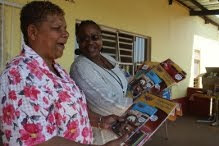
Boniswa Nyati hands over books to Ebenezer Hannah Home founder Shirley Merime

Continuing the spirit of Mandela Day, staff from the Nelson Mandela Foundation visited the Ebenezer Hannah Home outside Johannesburg, South Africa, to make a donation of clothing, shoes, toys, books, blankets and crockery.

These are the heartwarming stories we love to read about - organizations who do good work in their community, like the Ebenezer Hannah Home. The home was founded by Shirley Merime and houses 75 orphaned and abandoned children and 58 elderly people.

Shirley Merime expressed her gratitude and also thanked Mr Nelson Mandela for teaching South Africans not to have vengeance but to have love and forgiveness. She said: “Tata Mandela reached out for a better future and so that is what we are trying to teach our kids here.”

Source: The Nelson Mandela Foundation

Friday, September 17, 2010

Nelson Mandela Foundation Opposes Xenophobia


Read this interesting article from the Nelson Mandela Foundation about xenophobia, a hot topic at the recent “Dialogue for Social Change” seminar in South Africa.

The message from the Nelson Mandela Foundation is it's important that communities engage with one another about the issues they face. The Nelson Mandela Foundation hosted experts and community members to speak about the outbreak of xenophobic violence in South Africa.
The foundation's chief executive, Achmat Dangor, said: "We brought into one room people with a lot of expertise to take this message to communities".

Paul Graham from the Institute for Democracy in South Africa, spoke about knowledge being key to building trust and understanding. He touched on how, when research is conducted into some of the complex issues with which South Africa grapples, there is little feedback given to the community, meaning that there is little they can do to change. Sharing knowledge leads to a better society, he argued.

He said: “In truly democratic communities, we learn that, when we share knowledge and individuals prosper, our experience as a society expands for the better.”

Nelson Mandela Foundation Facilitates Discussion to Help Orphans

Tiyiselani, Kurhula and Shongi Shisingi, pictured on the left

The spirit of Mandela Day which was highlighted on July 18, continued in the rural community of Giyani in South Africa.

When a concerned teacher told the local church about the plight of three teenage girls living in a one-room shack, the community responded. They approached the Nelson Mandela Foundation for help to restore the dignity of this child-headed household.

The Nelson Mandela Foundation responded through its "Dialogue" program, which encourages and facilitates discussion around resolving critical social issues. It wasn't long before NGOs, the local church and business community had come together to build a four-room house for the teenagers. And to provide the girls with a sense of belonging, the Presbyterian Church committed to be their guardian.


"The conversations’ overwhelming appeal to the local community’s compassion proved that simple conversations can bring people together to build strong, supportive communities." - The Nelson Mandela Foundation


Read here for more of the story of the house that kindness built.

Friday, September 10, 2010

Positive Voice About HIV AIDS

The opening sentence, “Emma Cole climbed into her coffin and lay, contemplating her death” is bound to get your attention.

Read more about how this brave lady responded to the life-changing news in 1991 that she was HIV positive.

She speaks frankly about the stigma and misconceptions of the disease – after all, many assume HIV AIDS is an unlikely disease for a heterosexual, one-partner woman.

A 46664 supporter and campaigner for HIV AIDS prevention, Emma has turned her experience as a woman living with HIV into a positive story of educating others, in the hope that the younger generation will not put themselves at risk. Through her initiative, Positive Voice, she visits school children across the United Kingdom and presents the facts about HIV AIDS.

Speaking at over 100 schools each year. She likes to think that, because she doesn’t fit the profile people might expect of an HIV-positive person, she shatters illusions that they have about the virus.

Emma is shocked at the lack of basic knowledge about HIV AIDS in schools. Education is key in driving awareness of HIV AIDS prevention, and it’s a core message of the 46664 Bangle project. People wearing the 46664 Bangle raise awareness about global social issues.

Every 46664 Bangle sold directs funds to HIV AIDS prevention projects, such as Khululeka, the theatre group that educates students in South Africa about HIV AIDS and how to behave responsibly.

It's through individual voices such Emma Cole's, and the voice of the 46664 campaign of the Nelson Mandela Foundation, that we are able to continue education about global social issues. Read the full article about Emma Cole here and her September update on how she's feeling, here.